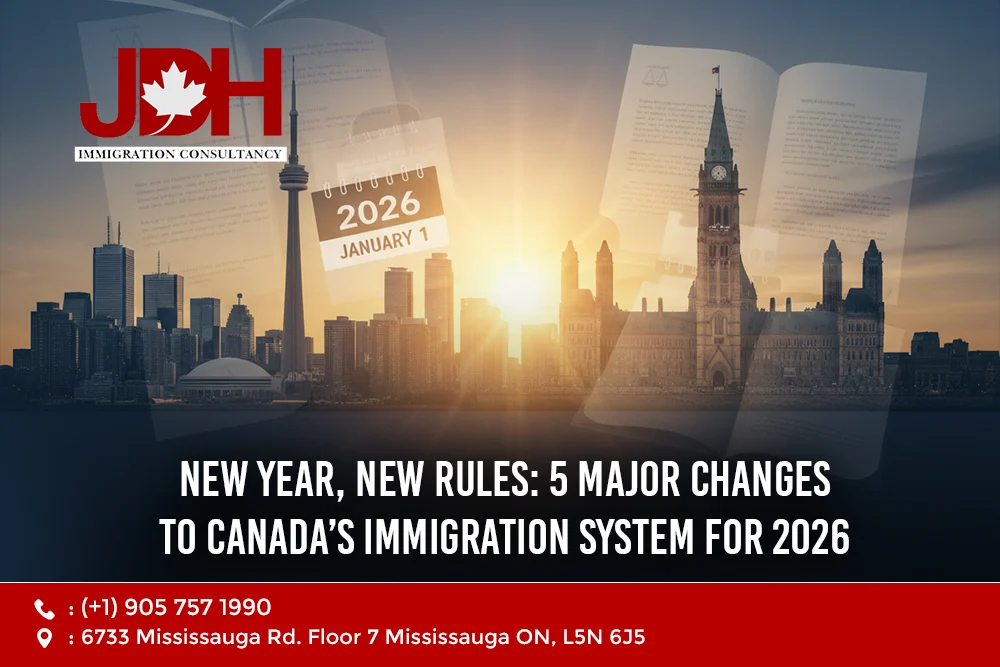
Happy New Year! As of January 1, 2026, several significant shifts have taken effect across the Canadian immigration and labour landscape. From easier pathways for graduate students to major changes for entrepreneurs, these updates could impact your journey to Canada.
At JDH Immigration Consultancy, we stay on top of these changes so you don’t have to. Here are the five key updates you need to know about right now.
1. Graduate Students: No More Attestation Letters (PAL/TAL)
If you are planning to pursue a Master’s or Doctoral degree at a public university in Canada, your application process just got a lot smoother.
- The Change: Graduate students are now exempt from the Provincial or Territorial Attestation Letter (PAL/TAL) requirement.
- The Impact: You are no longer counted toward Canada’s international student cap. This means faster processing (as little as two weeks for PhDs) and lower upfront costs, as you won’t need to pay institutional deposits to secure a PAL.
- Why it matters: It removes a major bureaucratic hurdle, making Canada even more attractive for high-level researchers and academics.
2. Closure of the Start-Up Visa (SUV) Program
In a surprising move, the federal government has officially stopped accepting new applications for the popular Start-Up Visa program.
- The Change: As of January 1, the SUV program is closed to new applicants.
- The Exception: If you received a commitment certificate from a designated organization in 2025, you have until June 30, 2026, to submit your application.
- What’s next? IRCC is transitioning to a “new, targeted pilot program for immigrant entrepreneurs.” Details are expected later this year.
3. Ontario’s “As of Right” Framework for Professionals
Are you a regulated professional (like an architect or engineer) certified in another Canadian province and looking to move to Ontario?
- The Change: Under the new “As of Right” framework, out-of-province professionals can now get work authorization in Ontario in as little as 10 business days.
- The Impact: You can work for up to six months while you finalize your Ontario-specific credentials. This applies to over 300 certifications across 50 regulatory bodies.
- Why it matters: It eliminates the months-long waiting periods that used to prevent skilled workers from relocating to Ontario quickly.
4. Ontario invokes Bans on “Canadian Experience” Requirements in job postings
This is a massive win for newcomers! Ontario has officially changed the Employment Standards Act to help level the playing field.
- The Change: Employers are now banned from listing “Canadian work experience” as a requirement in job postings or application forms.
- The Impact: This removes a major barrier for skilled immigrants who are qualified but haven’t yet held a job within Canada.
- Bonus Update: Employers must now also disclose if Artificial Intelligence (AI) is used during their hiring process.
5. Stricter Rules for Alberta’s Rural Renewal Stream
Alberta has updated its criteria to ensure the Rural Renewal Stream is used by those truly committed to settling in its smaller communities.
- The Key Changes:
- Work Permit Status: In-Canada candidates must have a valid work permit; “maintained status” is no longer sufficient.
- Residency: Those in lower-skilled roles (TEER 4 or 5) must already reside in Alberta to qualify.
- Expiration: Endorsement letters from communities are now only valid for 12 months.
- The Impact: These changes prioritize candidates already established in the province and prevent backlogs in the system.
How JDH Immigration Consultancy Will Help You
Navigating these changes can be overwhelming, but you don’t have to do it alone. Whether you are a student looking to skip the PAL process or an entrepreneur looking for the next available pathway, JDH Immigration Consultancy will help you find the best strategy for your specific situation.
Don’t let new regulations slow you down. Contact us today for a consultation to see how these 2026 changes affect your immigration plans!