One of the most important parts of the process of applying for refugee protection in Canada is your hearing with the Refugee Protection Division. A lot of people who are claiming asylum are nervous before this stage, but knowing how an RPD hearing in Canada works can help you get ready with confidence. You can tell your story clearly and have a better chance of getting a good decision if you get the right help and advice. JDH Immigration helps people who are applying for immigration every step of the way so they don’t feel alone.
What is the RPD, or Refugee Protection Division?
The Refugee Protection Division Canada is a part of the Immigration and Refugee Board of Canada (IRB). It decides if someone is eligible for refugee protection based on the proof and testimony they give. The RPD looks at each case on its own and makes decisions based on Canadian laws and international obligations.
What happens at an IRB refugee hearing?
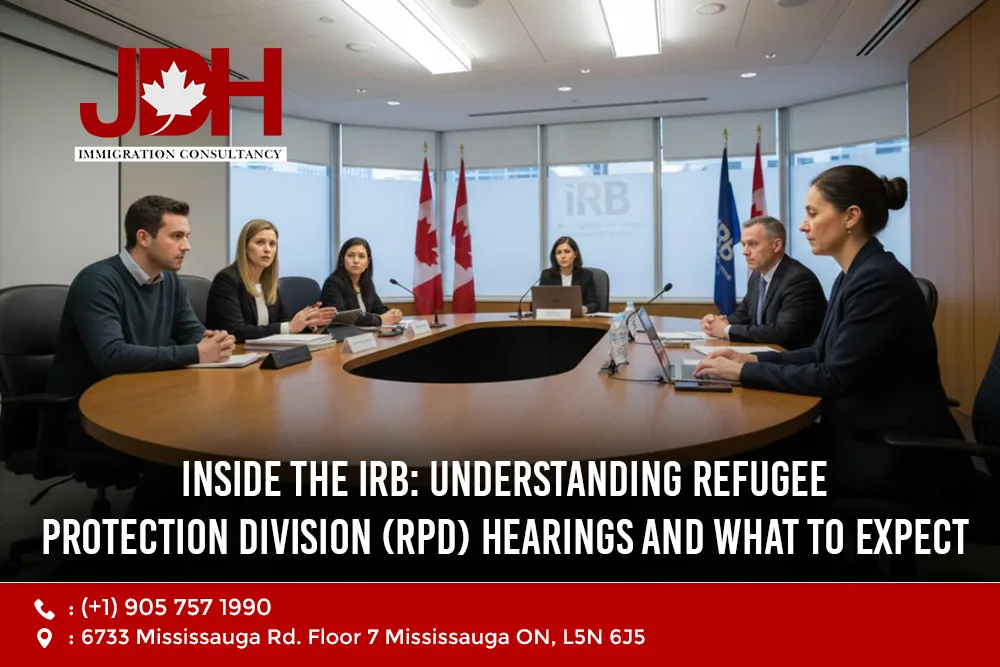
Most of the time, your IRB refugee hearing takes place in a private room with a decision-maker, an interpreter if you need one, and your lawyer. The goal is to help the member understand your story, why you left your home country, and why you are afraid to go back.
This is what you can expect:
- Check your identity and documents
The member will check your identity and go over your Basis of Claim (BOC) form, any supporting documents, and any changes.
- Questions About Your Story
Your testimony is the main part of the hearing. They will ask you about what happened to you, what scares you, and why you want protection. Being honest, clear, and consistent is very important.
- Proof and Clarification
The member can ask you to explain any parts of your story that aren’t clear or that they don’t understand. This happens a lot and doesn’t mean your claim is weak. It just helps the member understand your situation better.
- Final Thoughts
At the end, your lawyer may go over your case and point out the evidence that backs up your claim.
How to Get Ready for Your Refugee Hearing
Preparing well for a refugee hearing can make a big difference. People who know how the process works tend to feel more sure of themselves and give better testimony. JDH Immigration helps clients stay focused and calm by taking them through basic one on one communication, document reviews, and strategic planning.
Here are some ideas:
- Look over your BOC form and make sure you know all the details.
- Get all the important papers together early.
- Learn how to answer questions without memorizing them.
- Stay calm and be honest.
If you don’t feel comfortable speaking English or French, ask for an interpreter.
What Happens After the Canada Asylum Hearing Process?
After your Canada asylum hearing is over, the member may tell you their decision right away or send it to you in writing later. If you are accepted, you will become a protected person, which means you can apply for permanent residence. If you are denied, you may still be able to appeal or find other ways to immigrate.
How JDH Immigration Can Help You
It’s not easy to get through the RPD hearing system on your own. JDH Immigration gives claimants:
- Sessions for personalized preparation
- Full support for documents
- Help along the way with the IRB process
- Representation from people who have worked in the field
- At every step, clear communication
With the right help, you can make your case in the best way possible and make sure your voice is heard.